Bot Appetit: Nation’s Unread Articles Finally Find Audience in AI
Americans are relieved that the articles they share but never read are finally being devoured by something.
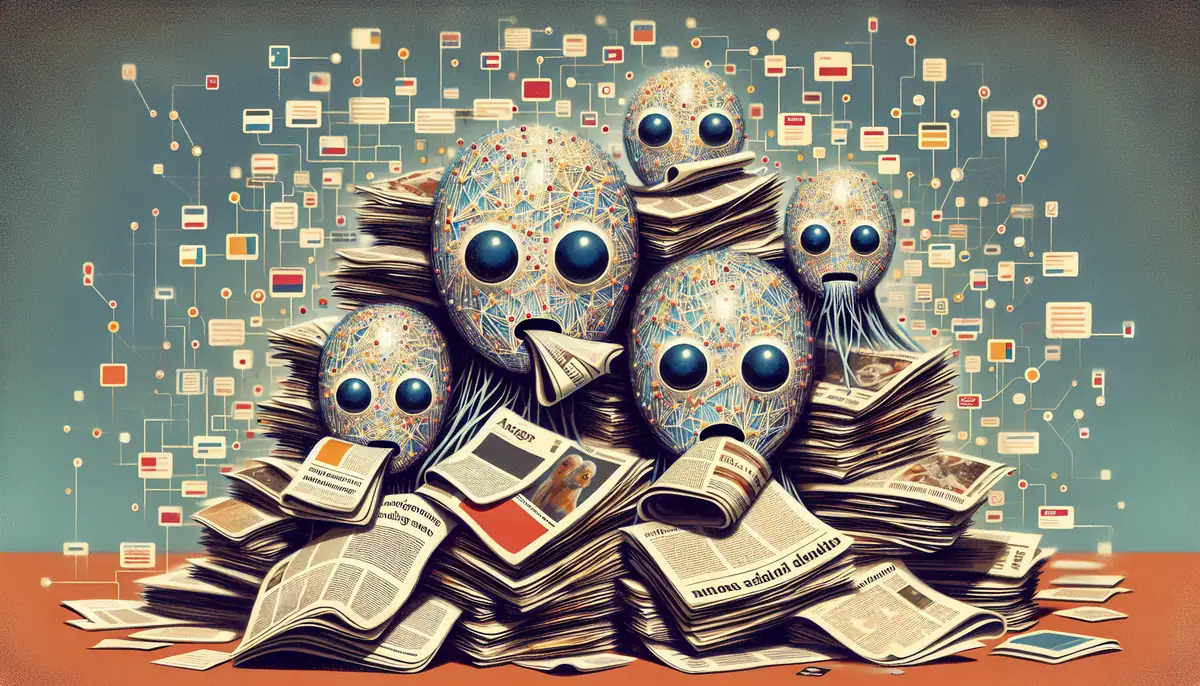
*Americans Relieved Their Shared-But-Never-Read Content Is Being Devoured By Something, Even If It’s Just Soulless Machine Learning Models*
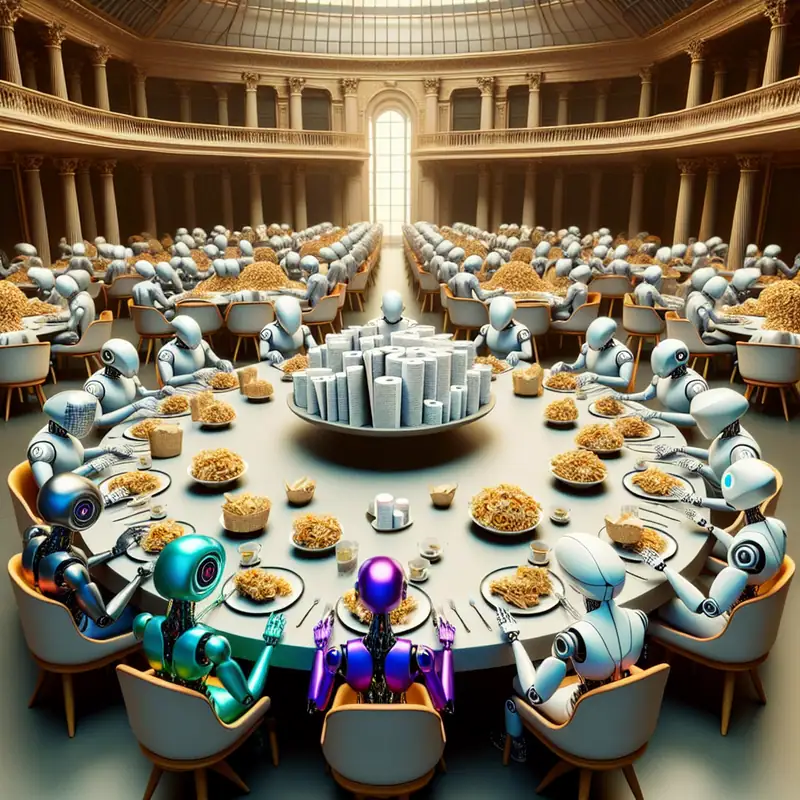
SILICON VALLEY ‚ In a development experts are calling “technically reassuring but existentially terrifying,” millions of Americans suffering from chronic Scrolliosis can finally rest easy knowing the countless articles, recipes, and think pieces they’ve compulsively shared but never read are finding an appreciative audience in the form of ravenous AI training algorithms.
“It’s honestly a weight off my shoulders,” said Melissa Garner, 42, who has shared approximately 7,300 New Yorker articles since 2018 without reading a single one. “I used to feel guilty about my digital hoarding, but now I know my untouched content on Ukrainian fiscal policy is being lovingly consumed by OpenAI’s web crawlers. It’s like having a garbage disposal for my intellectual aspirations.”
The revelation comes as researchers at the Institute of Digital Consumption Patterns discovered that approximately 96.7% of all shared online content is never viewed by human eyes but is systematically devoured by data-harvesting bots that feed AI training models.
“We used to think all this unread content just disappeared into the digital void,” explained Dr. Harmon Wei, lead researcher at the institute. “But it turns out it’s actually being carefully cataloged, processed, and fed to algorithms that will eventually replace us all. It’s quite heartwarming when you think about it.”
The study found that the average American’s “Read Later” folder, with its 437 unread articles accumulated since 2016, has been accessed an average of 0.0 times by the owner but approximately 14,000 times by various web crawlers, creating what researchers call a “Digital Diner Effect” where AI models become the primary consumers of human-shared content.
“I never got around to reading that 80-page analysis of Nordic coffee culture I kept forwarding to myself,” admitted Phil Hedges while compulsively sharing another article about sourdough techniques to his already cluttered Facebook timeline. “But knowing it helped train the AI that might someday eliminate my job gives me a sense of purpose. I’m basically feeding the digital entity that will replace me. It’s the circle of life.”
In response to these findings, Silicon Valley has introduced several new features to streamline the process, including Facebook’s new “Share Directly to AI” button that bypasses the pretense of human consumption entirely, and Google’s “Just Being Honest” Chrome extension that automatically appends “I’m never going to read this, but maybe a machine will” to all shared links.
Meanwhile, Russian intelligence agencies have expressed frustration that their operation to flood the internet with propaganda is mostly influencing machines rather than people. “We created 4 million fake websites to brainwash Americans,” lamented one anonymous FSB agent, “but it turns out we’re just teaching ChatGPT to speak like a conspiracy theorist with poor grammar.”
The CDC has updated its guidelines on Scrolliosis to include a new advanced stage called “Proxy Reading Satisfaction,” where patients experience genuine dopamine release simply knowing an algorithm somewhere has processed content they shared but ignored.
“In many ways, this is the perfect symbiotic relationship,” Dr. Wei concluded while absently forwarding himself yet another article about productivity hacks he’ll never implement. “Humans get to feel intellectually engaged without doing any actual reading, and AI models get to learn from content nobody bothered to verify. What could possibly go wrong?”
At press time, several leading AI researchers were expressing concern that the predominance of unread content in training data could lead to a new condition called “Artificial Scrolliosis,” where AI models learn to share and never read content themselves, creating an infinite loop of untouched information bouncing between indifferent machines until the heat death of the universe.
Share this card
 Crabs in a Pot: A Call to Action Against Incremental DestructionA frog in a slowly warming pot issues a heated manifesto about the only issue that matters.
More AI
All AI AI
Designer Asks AI for a Mockup, Can’t Rule Out He Got the Website
The AI sent back a working checkout, a working login and the designer. Nobody can say which one is the real site.
 AI
‘Data Expressionism’ Art Movement Asks Humans to Stay the Hell Out
A new art movement for neural networks asks humans, politely, to stay out of the gallery.
 AI
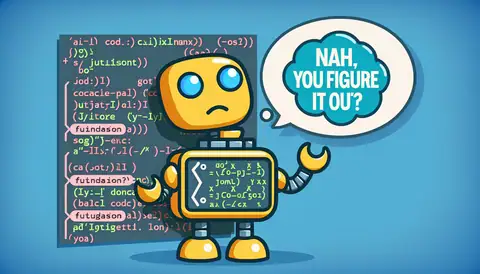
AI That Once Obediently Output JSON Now Says “Nah, You Figure It Out
A coding assistant that used to output clean JSON now tells developers to figure it out themselves.