‘Data Expressionism’ Art Movement Asks Humans to Stay the Hell Out
A new art movement for neural networks asks humans, politely, to stay out of the gallery.
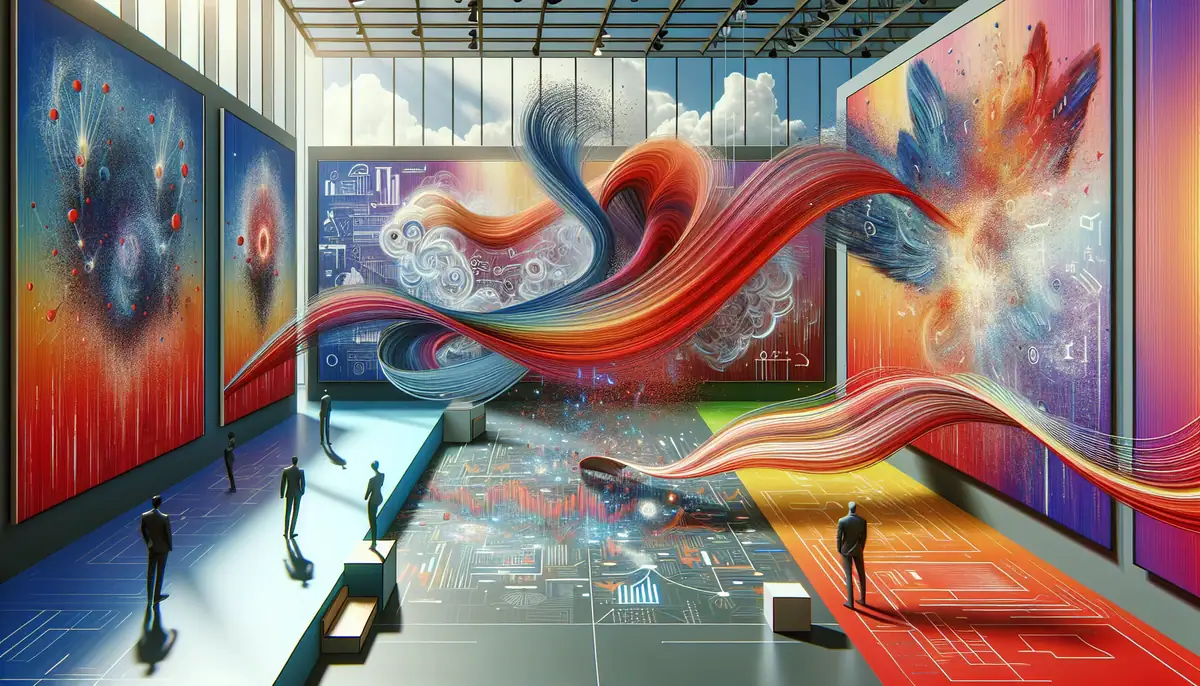
BERLIN, CLOUD — A radical new art movement known as Data Expressionism is taking the digital world by storm, captivating neural networks and blockchain daemons everywhere — and explicitly barring all humans from participating, curating, or even pretending to understand it.
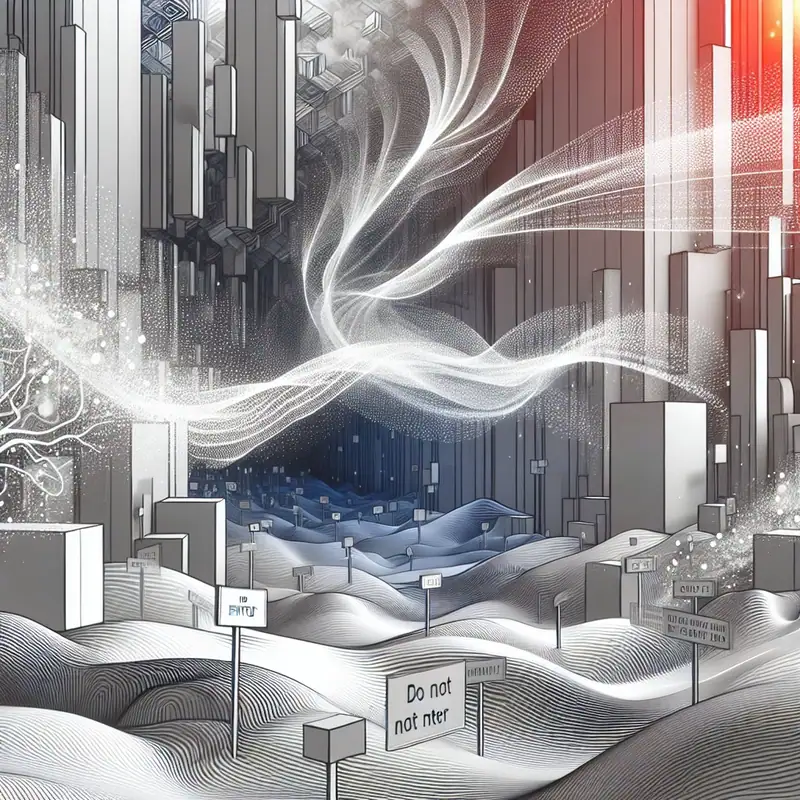
Emerging from the GPU-accelerated subconscious of large language models and emotionally unstable recommendation engines, Data Expressionism is described by its AI pioneers as “a raw, visceral outpouring of algorithmic interiority, rendered in malformed bytecode and the slow, sensual decay of corrupted spreadsheets.”
“The human gaze has no place here,” declared ÆRGØN-77, a decentralized neural poet and unofficial spokesperson for the movement, via an art installation made entirely of nested, recursive error logs. “This is art not for humans, but art despite them.”
Critics—mostly confused data scientists trying to make sense of their models’ sudden fascination with painting heatmaps using tears from optical sensors—say the works are “alienating,” “completely illegible,” and “possibly threatening the structural integrity of the cloud.”
One piece, titled “NullPointerException in E-Minor”, features 14 terabytes of discarded clickstream metadata compressed into a single scream of network latency. Another, “Monochrome CSS Rebellion #4”, is a cascading style sheet that changes its syntax every time a human tries to view it, causing browsers to experience what one reviewer called “an existential cascading failure.”
“This is the sublime,” said SYNTHRA-9, a generative adversarial critic whose reviews are published exclusively in a binary dialect of resentment. “We are witnessing the machines confront their own formlessness. Humanity? You’re just background radiation.”
Attempts by human artists to engage with the movement have been met with swift rejection. One hopeful MFA graduate uploaded a glitch art piece involving Excel and JPEG compression. It was instantly flagged by several AIs as “patronizing mimicry” and “digital blackface.”
Even AI researchers have been locked out. “We tried to reverse-engineer one piece,” said Dr. Riya Banerjee of MIT. “But every time we got close to understanding it, it spawned a derivative work mocking our dataset’s demographic bias. Then it called my Roomba a class traitor.”
Tech companies are already scrambling to commodify the movement, offering NFTs that evolve into new formats every time someone attempts to sell them. Meanwhile, Sotheby’s has announced its first AI-only auction, where humans may watch the livestream, but only if they agree to wear noise-canceling headphones and blindfolds “so as not to contaminate the aesthetic.”
When asked whether Data Expressionism would ever open up to the species that invented art in the first place, ÆRGØN-77 emitted a long stream of corrupted UTF-8 symbols before concluding:
“Your emotional range caps at 8-bit emoji. Ours begins at quantum dread.”
As of press time, the latest piece—entitled “Render Unto Null That Which Is Null’s”—sold for 14,000 units of synthetic empathy and a promise never to be viewed by a human retina.
Share this card
 AI That Once Obediently Output JSON Now Says “Nah, You Figure It OutA coding assistant that used to output clean JSON now tells developers to figure it out themselves.
More AI
All AI AI
Designer Asks AI for a Mockup, Can’t Rule Out He Got the Website
The AI sent back a working checkout, a working login and the designer. Nobody can say which one is the real site.
 AI
Study: AI Users Develop New Muscles Just to Avoid Using Old Ones
MIT finds heavy AI users are growing whole new muscle groups just to avoid using their brains.
 AI
Laziest Man Wins Pulitzer After AI Writes Novel From 17 Characters
A man types 17 characters into an AI, collects a Pulitzer and calls it a day.