Laziest Man Wins Pulitzer After AI Writes Novel From 17 Characters
A man types 17 characters into an AI, collects a Pulitzer and calls it a day.
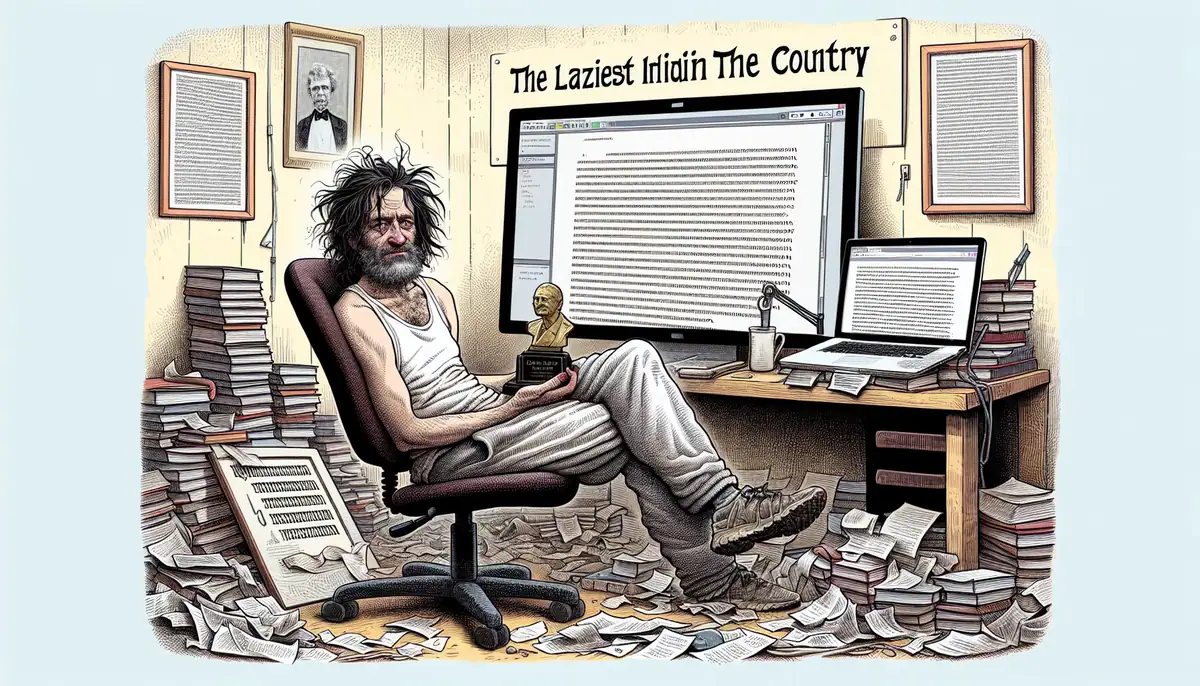
PORTLAND, OR — Local man Trevor Benson has been awarded a Pulitzer Prize in Literature for his groundbreaking book “How To Be Lazy,” despite typing only 17 characters during its entire creation process.
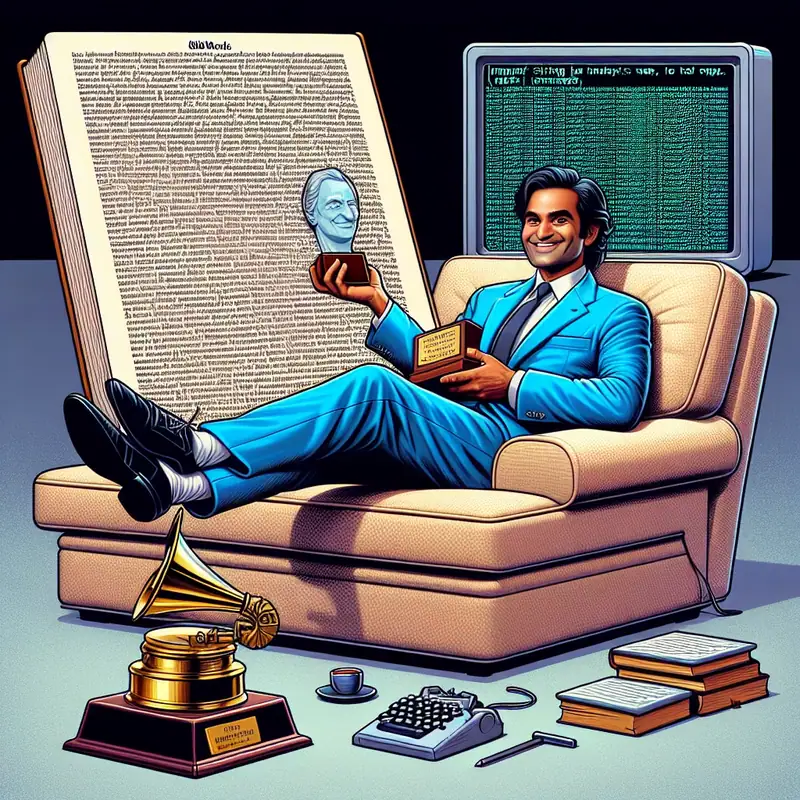
“I’m incredibly honored,” said Benson via an AI-generated voice message that he activated by blinking twice at his smart glasses. “This achievement represents the culmination of my life’s work of trying to do as little as possible.”
The 347-page literary masterpiece, which critics have hailed as “a towering achievement in the art of human indolence,” was produced entirely through Benson’s interactions with an AI writing assistant. His total contribution consisted of typing “write book” and then “chap” followed by a number eight consecutive times.
“It’s truly revolutionary,” explained Pulitzer board chairperson Marlene Wei. “Benson has redefined the very concept of authorship by demonstrating that the ideal ratio of human effort to creative output is approaching zero.”
According to sources close to Benson, he came up with the idea for the book while avoiding other work. “Trevor was supposed to be finishing his taxes,” said roommate Alex Sharma. “Instead, he spent four minutes asking an AI to write an entire book about laziness. The irony wasn’t lost on him, but acknowledging it would have required energy he wasn’t willing to expend.”
The book, which explores themes of minimal effort, strategic incompetence, and the philosophy of doing nothing, has sparked debate in literary circles about the nature of creativity in the AI era.
“We’ve always said that writing is 10% inspiration and 90% perspiration,” said Columbia University literary professor Diane Wang. “Benson has proven that with the right technology, it can be 100% respiration—just existing and occasionally exhaling toward a device.”
The award has not been without controversy. The Writers Guild has called for Benson’s disqualification on the grounds that “he didn’t actually write anything,” while AI ethics experts have questioned whether the assistant should receive co-author credit.
“The AI did all the work,” argued tech ethicist Ramon Gutierrez. “It researched, brainstormed, drafted, revised, and even came up with most of the jokes. Benson’s contribution was essentially equivalent to pointing at a blank page and grunting.”
Benson has dismissed these criticisms with a dismissive hand wave that activated his automated social media response system.
Publishing industry insiders report that Benson has already secured a seven-figure advance for his next book, which he plans to “write” by reducing his input to just a single emoji.
Benson’s editor at Random House, Sophia Chen, expressed excitement about the follow-up project. “We anticipate Trevor will exceed even his current standards of minimal effort,” Chen said. “Our goal is to publish a book where the author’s contribution approaches the theoretical minimum allowed by physics.”
At press time, Benson was unavailable for further comment as he was reportedly too exhausted from his Pulitzer acceptance speech, which consisted of him blinking “thank you” in Morse code while lying motionless on his ergonomic recliner.
Share this card
 Ultimate Prompt Generator for Corporate Drones Who Can’t ThinkStuck at a desk with no ideas? This prompt generator will think for you, for a price.
More AI
All AI AI
Designer Asks AI for a Mockup, Can’t Rule Out He Got the Website
The AI sent back a working checkout, a working login and the designer. Nobody can say which one is the real site.
 AI
‘Data Expressionism’ Art Movement Asks Humans to Stay the Hell Out
A new art movement for neural networks asks humans, politely, to stay out of the gallery.
 AI
AI That Once Obediently Output JSON Now Says “Nah, You Figure It Out
A coding assistant that used to output clean JSON now tells developers to figure it out themselves.