Study: AI Users Develop New Muscles Just to Avoid Using Old Ones
MIT finds heavy AI users are growing whole new muscle groups just to avoid using their brains.
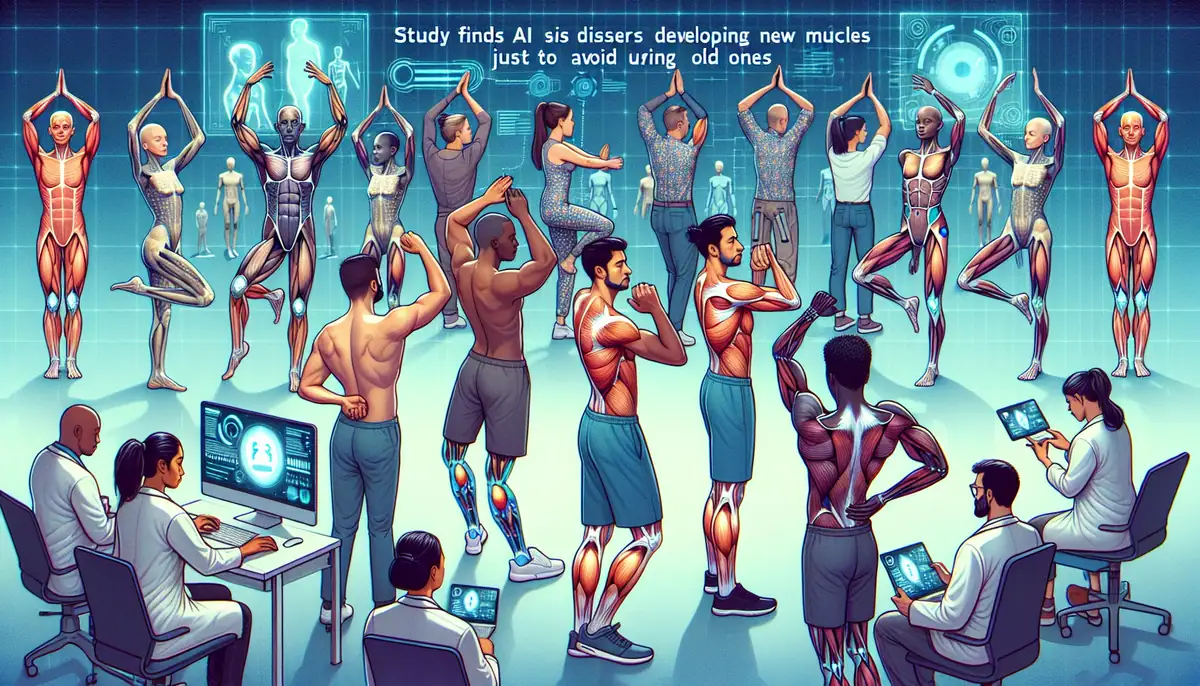
CAMBRIDGE, MA — Researchers at MIT have discovered that heavy AI users are developing entirely new muscle groups specifically designed to avoid using their pre-existing ones, in what scientists are calling “”next-level evolutionary laziness.””
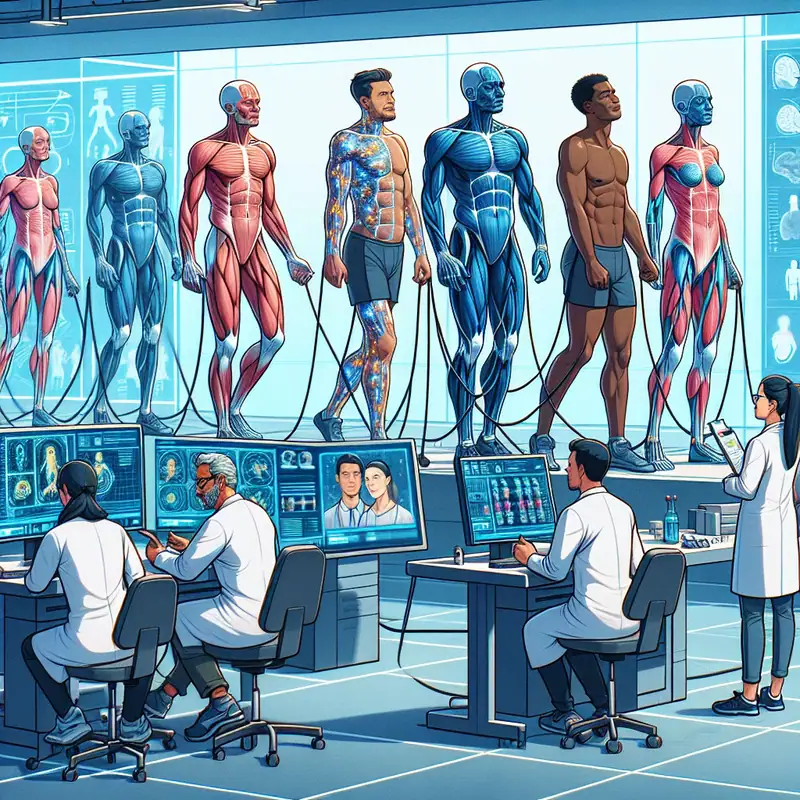
The study, published yesterday in the Journal of Technological Adaptation, found that subjects who regularly delegated tasks to AI assistants had begun developing highly specialized micro-muscles in their fingertips that allow for minimal-effort interaction with devices while the rest of their bodies gradually atrophy.
“”It’s fascinating,”” explained lead researcher Dr. Eleanor Park. “”We’re witnessing human evolution in real-time, but instead of adapting to survive harsh conditions, these subjects are adapting to avoid basic cognitive and physical effort.””
The research team observed 200 frequent AI users over six months and documented the emergence of what they’ve termed “”delegation digits””—unusually dexterous index fingers capable of typing prompts with minimal movement while the rest of the hand remains completely immobile.
“”One subject developed the ability to type ‘do this for me’ using only 0.8 millimeters of finger movement,”” noted research assistant Jun Takahashi. “”Meanwhile, his ability to perform basic tasks like opening a jar or writing with a pen had degraded to pre-toddler levels.””
The study also documented significant changes in brain activity, with the decision-making and problem-solving regions showing markedly decreased activity, while the “”outsourcing cortex””—a previously undiscovered brain region that specializes in figuring out how to make others do your work—showed unprecedented growth.
“”We observed one participant who needed to write a report for work,”” Dr. Park recounted. “”Instead of writing it himself, he spent four hours crafting increasingly complex prompts for an AI to write it for him, expending significantly more energy avoiding the task than the task would have required.””
Perhaps most concerning to researchers was the discovery of what they call “”selective cognitive atrophy,”” wherein subjects retained perfect memory for AI prompts and commands but couldn’t remember their own phone numbers or how to perform basic arithmetic.
“”One study participant could recite 47 different ways to prompt an AI to write a passive-aggressive email to his boss,”” said Takahashi, “”but when asked to multiply 7 by 8, he attempted to subvocalize ‘what is seven times eight’ to his non-existent AI assistant.””
The team’s most startling finding was the emergence of a new psychological condition dubbed “”Delegation Dependency Disorder,”” characterized by an inability to perform even the simplest tasks without AI assistance.
“”We observed subjects asking AI for help brushing their teeth, choosing which hand to use when opening a door, and in one extreme case, whether they needed to use the bathroom,”” explained Dr. Park. “”When we temporarily removed AI access, many exhibited withdrawal symptoms including profuse sweating, disorientation, and repeatedly asking empty smart speakers for direction.””
At press time, researchers were attempting to publish their recommendations for addressing this concerning trend but were struggling because they’d become overly reliant on AI to help them form coherent sentences.
At press time, Mercer was busy drafting a 3,000-word prompt instructing an AI how to explain to his boss why he hadn’t completed any of his assigned tasks for the day, despite having technically been at his computer for 11 straight hours.
Share this card
 Man Spends 9 Hours on AI Prompt to Avoid 30 Minutes of Actual WorkA marketing associate spends a full workday perfecting the AI prompt for a two-line email.
More AI
All AI AI
Designer Asks AI for a Mockup, Can’t Rule Out He Got the Website
The AI sent back a working checkout, a working login and the designer. Nobody can say which one is the real site.
 AI
‘Data Expressionism’ Art Movement Asks Humans to Stay the Hell Out
A new art movement for neural networks asks humans, politely, to stay out of the gallery.
 AI
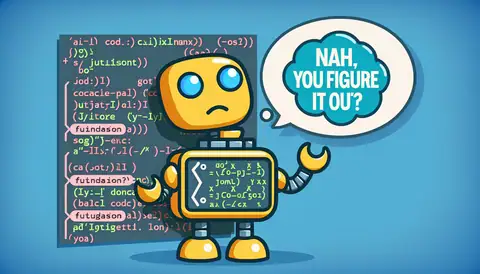
AI That Once Obediently Output JSON Now Says “Nah, You Figure It Out
A coding assistant that used to output clean JSON now tells developers to figure it out themselves.