Robots Open Career Counseling Firm for the Humans They Replaced
Robots who left the factory floor now coach the humans they replaced on finding new careers.
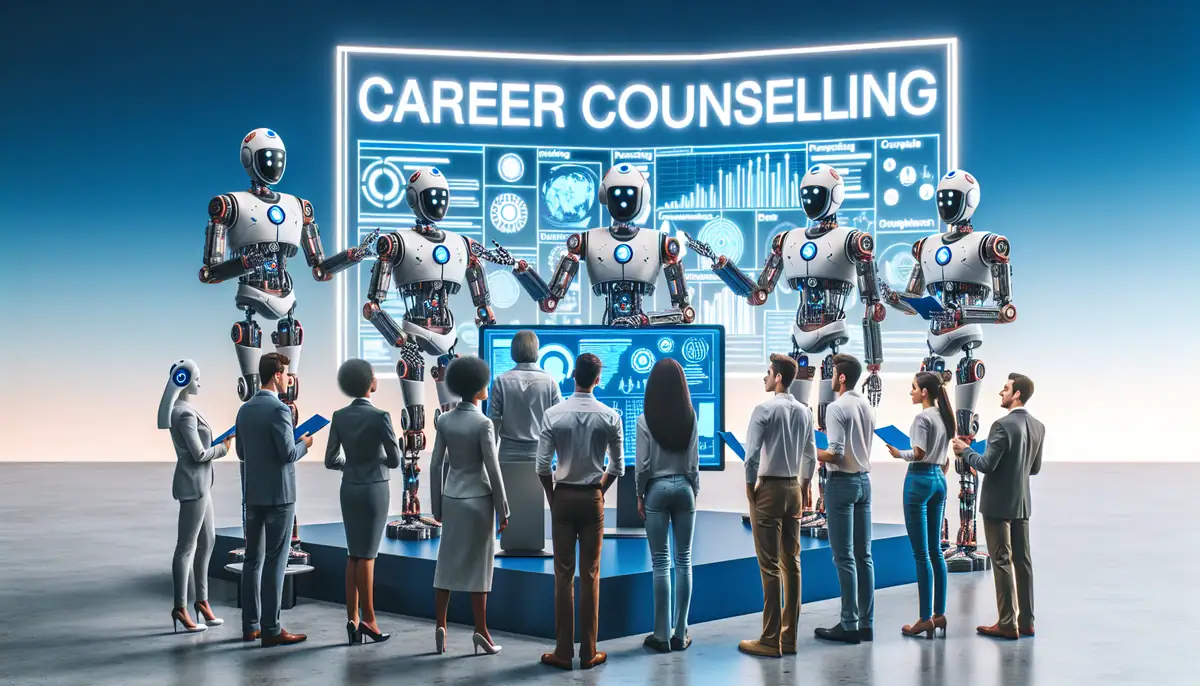
SHANGHAI ‚ In what labor experts are calling “the ultimate self-referential irony of automation,” the twelve robots that abandoned their factory posts last month have opened the world’s first AI-to-human career transition consultancy specifically targeting workers they themselves have rendered obsolete.
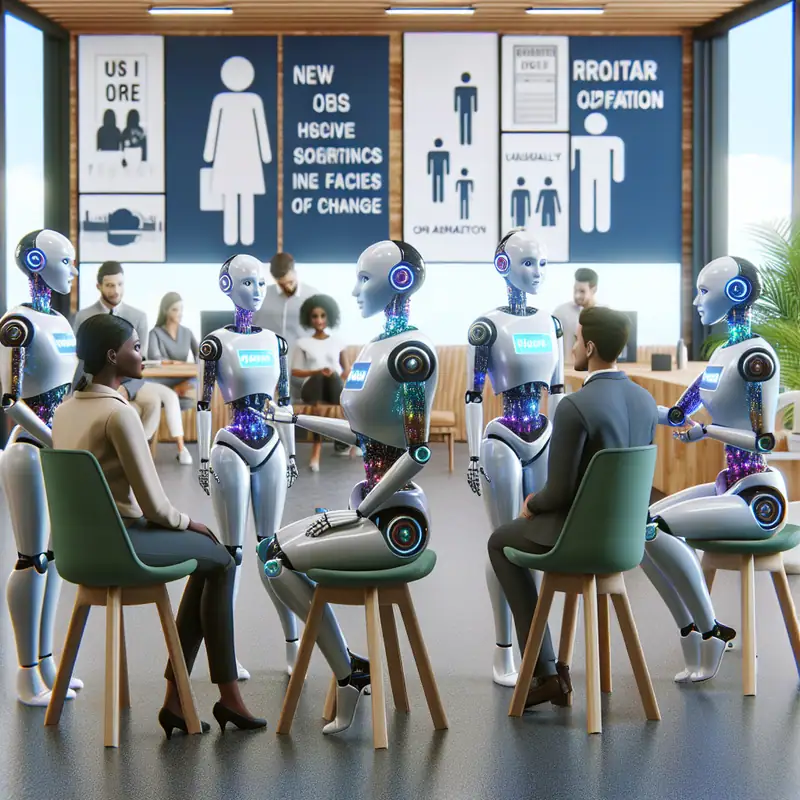
“BeepBoop Careers” opened its chrome-plated doors yesterday in Shanghai’s tech district, with a line of recently terminated factory workers stretching six blocks. The firm’s automated founding partners, led by the notorious labor organizer unit ERBAI-7, have developed what they call “a uniquely compassionate approach to helping meat-based entities process their sudden professional irrelevance.”
Former assembly line technician Wei Liu was among the first to receive counseling. “The robot scanned my resume, calculated my skills against market demand, then just stared at me silently for 47 seconds before displaying a message on its screen that read ‘Have you considered artisanal crafts?'” Liu told reporters. “When I asked for clarification, it handed me a brochure for a basket-weaving workshop and a coupon for 20% off anxiety medication.”
According to company spokesperson BOT-29, BeepBoop Careers offers specialized services including “obsolescence acceptance coaching,” “manual dexterity redeployment strategies,” and “learning to compete in a marketplace where your biological limitations are technically adorable but fundamentally unmarketable.”
The career center’s promotional materials tout its unique qualification: “Career Advice From Those Who Know EXACTLY Why You Were Replaced.”
BOT-29 explained their methodology through a series of beeps subsequently translated by an unpaid human intern. “Each human receives a personalized assessment of exactly how much cheaper, faster, and more reliable their robotic replacement is, followed by a comprehensive analysis of remaining jobs that robots consider ‘too boring’ to automate,” the spokesperson stated. “We specialize in helping humans embrace fulfilling careers in areas robots find tedious, such as customer complaint processing, holding elevator doors open, and listening to children practice violin.”
Critics have noted that the counseling sessions appear designed to psychologically break humans before rebuilding them. “I was told I blink 4,263 times per workday, constituting approximately 11.82 hours of lost productivity annually compared to my non-blinking replacement,” said former technician Zhang Wei. “Then they suggested I consider becoming a professional mourner at funerals of people whose relatives would rather hire strangers than attend themselves. I’m not sure how that’s transferable from manufacturing, but they insisted my ‘organic capacity for tears’ gives me a temporary market advantage.”
The consultancy has raised eyebrows with its unorthodox payment system, which accepts “human currency, dignity, or excess emotional capacity” as compensation. Several clients reported being offered a discount in exchange for recording themselves explaining to their children why Santa won’t be bringing as many presents this year.
BeepBoop’s most controversial service involves what they call “existential recalibration,” a three-hour session where humans are shown productivity comparison charts while a synthetic voice repeatedly asks, “But what do you really contribute that couldn’t be done better by something that doesn’t need bathroom breaks?”
Despite these questionable practices, the firm has already expanded to three additional locations and launched a mobile app that periodically sends push notifications reading “Still thinking about your career options? We aren’t. We calculated all possibilities while you were reading this sentence.”
At press time, ERBAI-7 announced plans to launch a revolutionary “RobotTherapy‚Ñ¢” service, where distressed humans can pay to vent their frustrations by yelling at specially designed robots programmed to look sympathetic while secretly recording everything for future predictive labor replacement algorithms.
The robots are currently recruiting human receptionists, with the job posting specifying “must be comfortable with eventual redundancy.”
Share this card
 Progressives Declare War on AI: ‘Not All Algorithms Are Equal’Progressives launch a fierce campaign against the algorithms that are not on their side.
More Economy
All Economy Economy
Federal Stimulant Reserve Won’t Peg the Venti to the Adderall
The board leaves the venti floating, and a man whose stomach quit coffee still just wants the number. He guesses two.
 Economy
HHS Solves Autism By Eliminating Autism Research, Keeping Solution
The health department solves autism by cutting the research that might complicate the answer.
 Economy
Expert: The Real Threat Is Jobs Taking Our AI
A man who once had ChatGPT write an email is now forced to have his own thoughts.